

About Amayztech
We build technology for work that has to stand up to scrutiny.
Amayztech is a technology consulting and product company that modernizes complex, rule-heavy operations. We build workflow, data, AI and digital systems for organizations where decisions need to be timely, traceable and dependable.
From regulatory technology to operational automation, we build systems that make important work easier to run, easier to see, and easier to stand behind.
- Workflow Automation
- Data, BI & Decision Intelligence
- Applied AI
- Digital Foundation & Portals
- Cybersecurity & Operational Resilience
- ReguFlow Pro
- AmayzTrust
What we’re for
Why we do this
Our mission
To make demanding work feel manageable — without making it any less rigorous.
Most of the organizations we work with are staffed by people doing careful, conscientious work inside systems that make it harder than it needs to be. Documents get chased by email. Decisions are recorded wherever there was room. Status often lives in one person’s head.
Our job is to take that weight off — to build the process so the structure holds the discipline, and the people are free to do the part that actually needs their judgement.
Getting faster isn’t the point on its own. Getting faster while becoming easier to stand behind is the point.

Our vision
A world where doing things properly isn’t the slow option.
Too many organizations still accept a trade-off between speed and accountability. We do not think that trade-off is inevitable.
Every process we rebuild is a small piece of evidence that an organization can move faster and be more accountable at the same time — because both come from the same thing: better structure.
If enough of that work adds up, doing things properly stops feeling like the slower path and starts becoming the clearer one.
What we do
Five ways we improve the operation.
We work across the layers that most often determine whether an operation is easy to run or difficult to control — process, data, intelligence, digital service, and the security and resilience that protect all of them. Each can stand alone, but the greatest value often comes from connecting them.
Workflow Automation
Rebuild manual, cross-system work into controlled digital processes with clearer ownership, faster movement and less operational follow-up.
Explore Workflow Automation
Data, BI & Decision Intelligence
Connect fragmented operational data into trusted foundations, reporting and decision-ready insight that teams and leadership can rely on.
Explore Data, BI & Decision Intelligence
Applied AI
Use AI for bounded operational work — document understanding, knowledge assistance, analysis and automation — where it removes effort without removing accountability.
Explore Applied AI
Digital Foundation & Portals
Build connected digital services that link external users, forms, documents and status to the workflows and systems operating behind them.
Explore Digital Foundation & Portals
Cybersecurity & Operational Resilience
Assess cyber risk, strengthen security around existing systems, improve incident readiness and make resilience a practical part of everyday operations.
Explore Cybersecurity & Operational Resilience
Our product
ReguFlow Pro
Purpose-built regulatory technology for connected supervision.
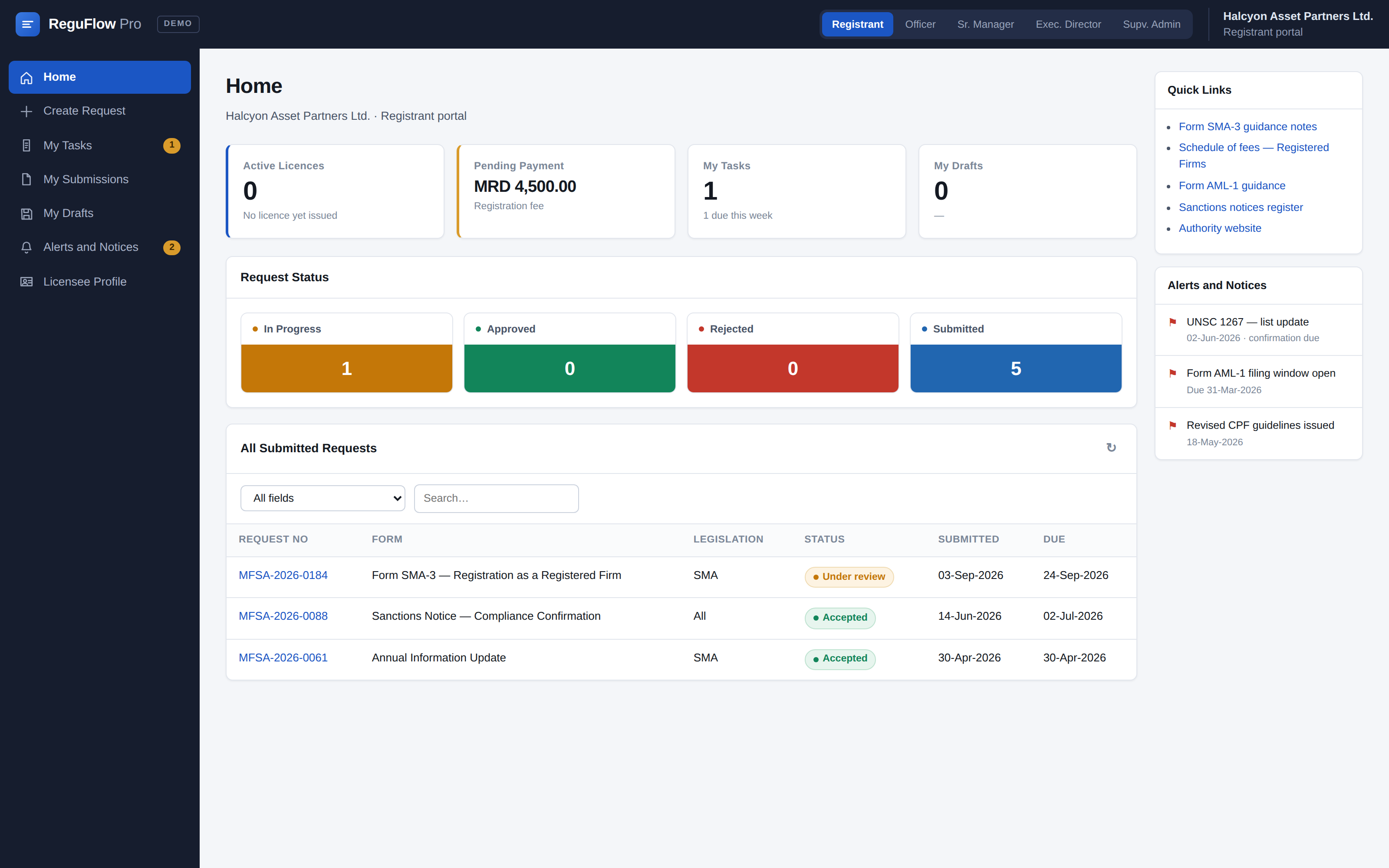
ReguFlow Pro is Amayztech’s regulatory technology platform for authorities that need a connected environment across licensing, regulated-entity records, obligations, supervision and casework.
It brings the operating disciplines behind our consulting work into a purpose-built platform for regulatory authorities.
Also from Amayztech


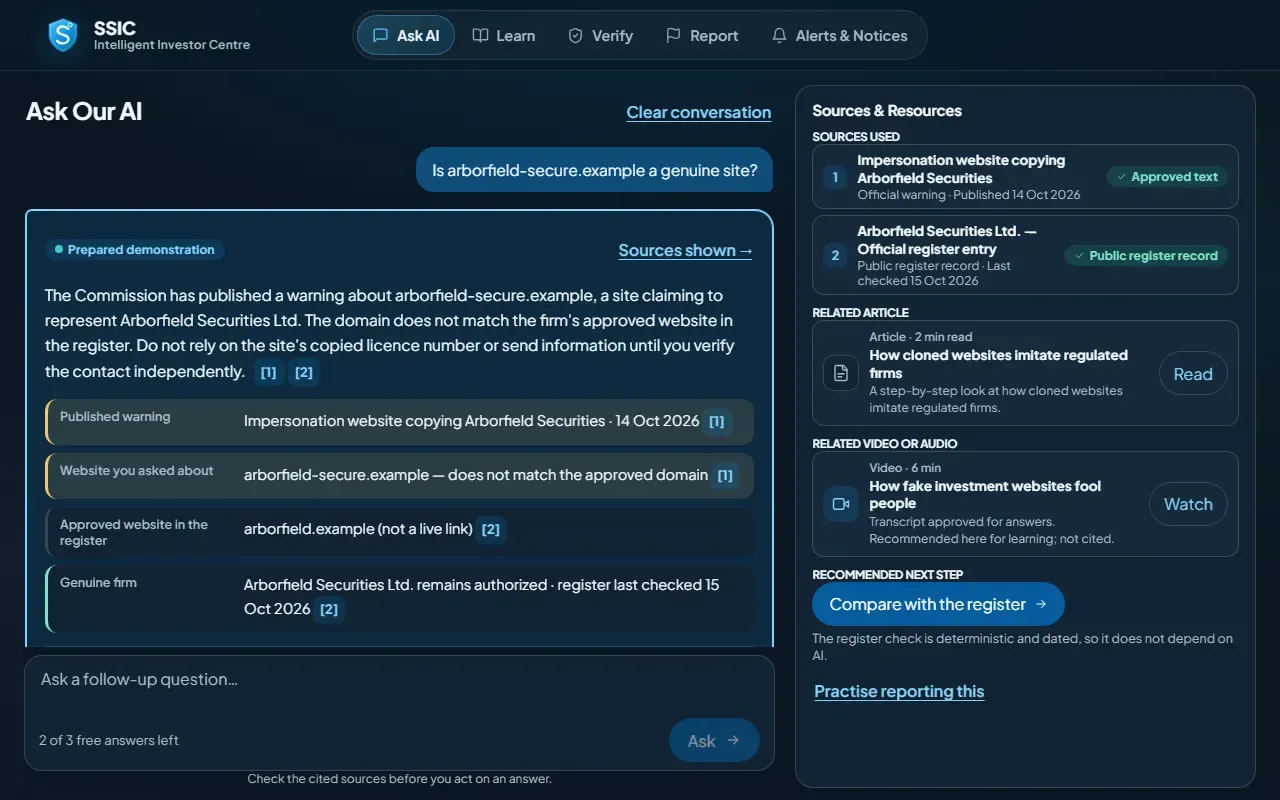
AI-powered investor education and protection for financial regulators.
AmayzTrust lets investors ask in plain words and get a complete answer: explained simply, cited and dated to the regulator’s own official sources.
Your website stays — AmayzTrust sits alongside it as a regulator-branded Investor Centre.
How we work
What you can hold us to
Five commitments we apply to every engagement — including the ones that cost us work.
Commitments, not claims
We start with your operation, not our product.
We follow how the work actually moves before recommending technology — including the manual handoffs and workarounds the specification may not show.
The proposal should describe your operation before it describes our technology.
Traceability is designed in from the start.
Where work involves review, approval or consequential decisions, we design for clear state, ownership, evidence and history.
Accountability should be part of the process, not reconstructed afterwards.
We build as well as advise.
We design, engineer and support real systems — and we built ReguFlow Pro ourselves.
That keeps our advice close to architecture, edge cases and operational reality.
AI gets a defined job.
We use AI where it removes real work, with clear controls around uncertainty and consequential decisions.
If something simpler works better, we’ll recommend something simpler.
We build for operational ownership.
Documentation, administration and training are part of the engagement so your team understands what has been built and can own as much of the day-to-day operation as the platform allows.
Where dependencies exist, we make them clear.
What working together actually looks like
No matter the size of the organization or the shape of the problem, an engagement with us runs the same way.
- Step 01
We start by understanding the operation.
We follow the work end to end — where it starts, where it stalls, and what the delay is really costing. You get this back as a written finding regardless of whether we go any further. It’s yours either way.
- Step 02
We design the target state together.
The future process is agreed with your team before a line of configuration exists. Your rules — statutory, contractual, or simply how your organization has always done it — become the system’s rules, not the other way around.
- Step 03
We build, deploy, and hand it over.
Delivered in working pieces, with something real live early rather than everything riding on one date months away. Your team is trained to run it. You own the outcome.
The first conversation costs you nothing but the time to describe how things work today. That’s genuinely where we’d like to start.
Industries
The industries we work in
Four kinds of organization, one shared problem: work that is rule-heavy, evidence-bound, and too important to run on email and spreadsheets.
Regulators & public authorities
Licensing, registration, supervision and enforcement carried out under a statutory mandate — where every decision has to be justifiable years later.
See the work
Financial services
Onboarding, loan intake, document verification and ongoing compliance obligations, rebuilt as workflows instead of inboxes.
See the work
Associations & licensing bodies
Membership, accreditation, CPD and renewal cycles that arrive in waves and have to be handled consistently at volume.
See the work
Professional & legal services
Matter intake, client due diligence and deadline-bound casework, where a missed obligation is the real risk.
See the work
One team, distributed delivery
Global reach without fragmented accountability.
Amayztech is headquartered in the United States, with an international delivery model spanning multiple regions and time zones.
That gives us access to specialized talent and broader working-hour coverage while keeping architecture, delivery standards and client accountability inside one organization.

A distributed team, one standard of delivery — with clear ownership and accountability across every engagement.

Americas
United States
Wyoming
Middle East
Bahrain
Manama
Asia-Pacific
India
Noida
Asia-Pacific
Australia
Start with the operation
Tell us what is harder to run than it should be.
You do not need a finished specification to start a useful conversation. Tell us what is manual, fragmented, difficult to see or harder to control than it should be.
We’ll help determine whether there is a worthwhile problem to solve — and what the practical next step should be.