

Technology for regulators
Technology for modern regulation and supervision.
For regulators and supervisory authorities, technology has to do more than collect data. It needs to connect licensing, regulatory submissions, entity records, supervisory workflow, cases, analytics and emerging AI capabilities around an operating model officers can use and leadership can govern.
Amayztech helps authorities design and modernize that environment — from individual regulatory functions to a connected supervisory platform.
- Licensing
- Filings & obligations
- Entity records
- Supervision & casework
- Regulatory data
- Applied AI
Regulatory capabilities
The technology should follow the work of regulation.
Different authorities have different mandates, but the technology usually has to support a common set of operational questions: who is authorized, what they must submit, what has changed, what requires attention and what action has already been taken.
Who is allowed to operate?
Applications, requirements, assessment, decisions, variations and renewals need a controlled path from intake to determination.
What must regulated entities provide?
Recurring returns, declarations, event-driven filings and information requests should remain connected to the entity and obligation that produced them.
What does the authority know about the entity?
Licences, people, relationships, submissions, obligations, documents and supervisory history become more useful when they remain connected around one regulatory record.
What requires supervisory attention?
Risk assessment, supervisory activity, examinations, findings, requests, cases and follow-up need defined ownership and a continuous record.
What is changing across the supervised population?
Operational and supervisory data should reveal workload, trends, exceptions, risk signals and emerging issues without requiring another manual reporting exercise.
How do regulated entities interact with the authority?
Portals, forms, documents, correspondence and status should connect external interaction to the internal regulatory process rather than becoming another disconnected channel.
The technology layers
A modern regulatory technology environment has several layers.
Portals, workflows, databases, dashboards and AI tools are not separate modernization stories. They become more valuable when they share the same regulatory context.
- 01
Digital Interaction
The external layer through which regulated entities, applicants and other stakeholders submit information and interact with the authority.
Digital Foundation & Portals - 02
Regulatory Workflow
The operating layer that moves regulatory work through defined states, ownership, review and action.
Workflow Automation - 03
Connected Records & Integration
The connective layer that keeps regulatory context intact while allowing existing systems to remain authoritative where appropriate.
- 04
Data & Decision Intelligence
The analytical layer that turns operational and supervisory information into visibility for officers and leadership.
Data, BI & Decision Intelligence - 05
Applied Intelligence
The assistance layer that helps people work through large volumes of information without transferring consequential regulatory authority to the model.
Applied AI
Supervisory context
Context is what turns regulatory information into supervisory intelligence.
A filing is more useful when it is connected to the entity that submitted it. A risk signal means more when an officer can see the licence, obligations, relationships, previous findings and open cases around it.
The same applies to decisions. Evidence, review and history should remain connected to the regulatory context in which the decision was made.
The goal is not simply more data. It is a regulatory record that helps the authority understand what it knows, what has changed and what requires attention.
From data to supervisory action
Better supervision needs better data — but data alone is not enough.
Regulatory data has to be collected consistently, validated, understood in context and made usable for both operational and supervisory decisions.
Dashboards are only the visible end of that chain. Behind them sit definitions, history, data quality, integration, models and the operating processes that determine what happens when something requires attention.
The useful question is not only "what does the data show?" It is also "what should happen next?"
Collect
filings · forms · APIs
Validate
quality · completeness · rules
Connect
entity · history · context
Model
definitions · indicators · measures
Interpret
trends · anomalies · risk
Act
review · escalation · supervision
AI & supervision
AI should increase supervisory capacity without weakening accountability.
Regulatory work contains large amounts of structured and unstructured information: filings, documents, correspondence, rules, prior cases and supervisory data.
Applied carefully, AI can help officers classify material, extract information, retrieve relevant knowledge, summarize evidence, identify patterns and prioritize what deserves attention.
The design principle should remain straightforward: AI assists the work; accountable people retain authority over consequential regulatory decisions.
AI can assist with
- document classification
- information extraction
- knowledge retrieval
- summarization
- comparison
- anomaly or pattern assistance
- prioritization and triage
Human governance remains around
- interpretation
- challenge
- investigation
- escalation
- supervisory judgement
- final regulatory action
AI capability depends on the quality, accessibility and governance of the information underneath it.
Explore Applied AIModernization paths
Modernization does not have to begin with replacing everything.
Most authorities already have systems that perform important functions. The modernization question is not simply what to replace. It is which systems should remain authoritative, where workflow is missing, where information is fragmented and where integration can create a more coherent operating environment.
Connect what already works.
Integrate existing systems, establish clearer workflow and improve the movement of data, documents and status across the operation.
- core systems remain useful
- friction sits between applications
- visibility is fragmented
Rebuild a priority regulatory function.
Modernize a specific function such as licensing, regulatory filings, portals, casework or supervisory reporting where the existing process no longer supports the operating requirement.
- one function creates disproportionate friction
- the current process is heavily manual
- scope can be isolated and improved
Create a connected supervisory environment.
Introduce a shared operating model where licensing, entity records, obligations, supervision and casework need to remain connected around one regulatory context.
- multiple functions need a common record
- fragmented context is the core problem
- the authority is ready for broader modernization
From architecture to implementation
One regulatory technology environment. Multiple ways to improve it.
Amayztech works across the layers that connect regulatory operations — from workflow and data foundations to AI-assisted review and external digital services.
Workflow Automation
Coordinate regulatory review, approvals, obligations, tasks and supervisory processes across people and systems.
Explore Workflow AutomationData, BI & Decision Intelligence
Connect regulatory and operational data into trusted reporting, supervisory indicators and decision-ready insight.
Explore Data, BI & Decision IntelligenceApplied AI
Reduce information-heavy work through document intelligence, retrieval and bounded AI assistance with explicit human review.
Explore Applied AIDigital Foundation & Portals
Connect regulated-entity submissions, documents, correspondence and status to the processes and systems behind them.
Explore Digital Foundation & PortalsCyber resilience is both an operational concern for the authority and, where within its mandate, a supervisory concern across regulated firms.Explore Cybersecurity & Operational ResilienceRead the six cyber resilience priorities
When the requirement is a connected supervisory platform
ReguFlow Pro
One operating environment across licensing, regulated-entity records, obligations, supervision and casework.
ReguFlow Pro is Amayztech's purpose-built regulatory platform for authorities that need these functions connected around a shared supervisory record.
It is one implementation path within the wider regulatory technology landscape — appropriate where the operating requirement calls for a connected supervisory platform rather than a collection of separate improvements.
Explore ReguFlow Pro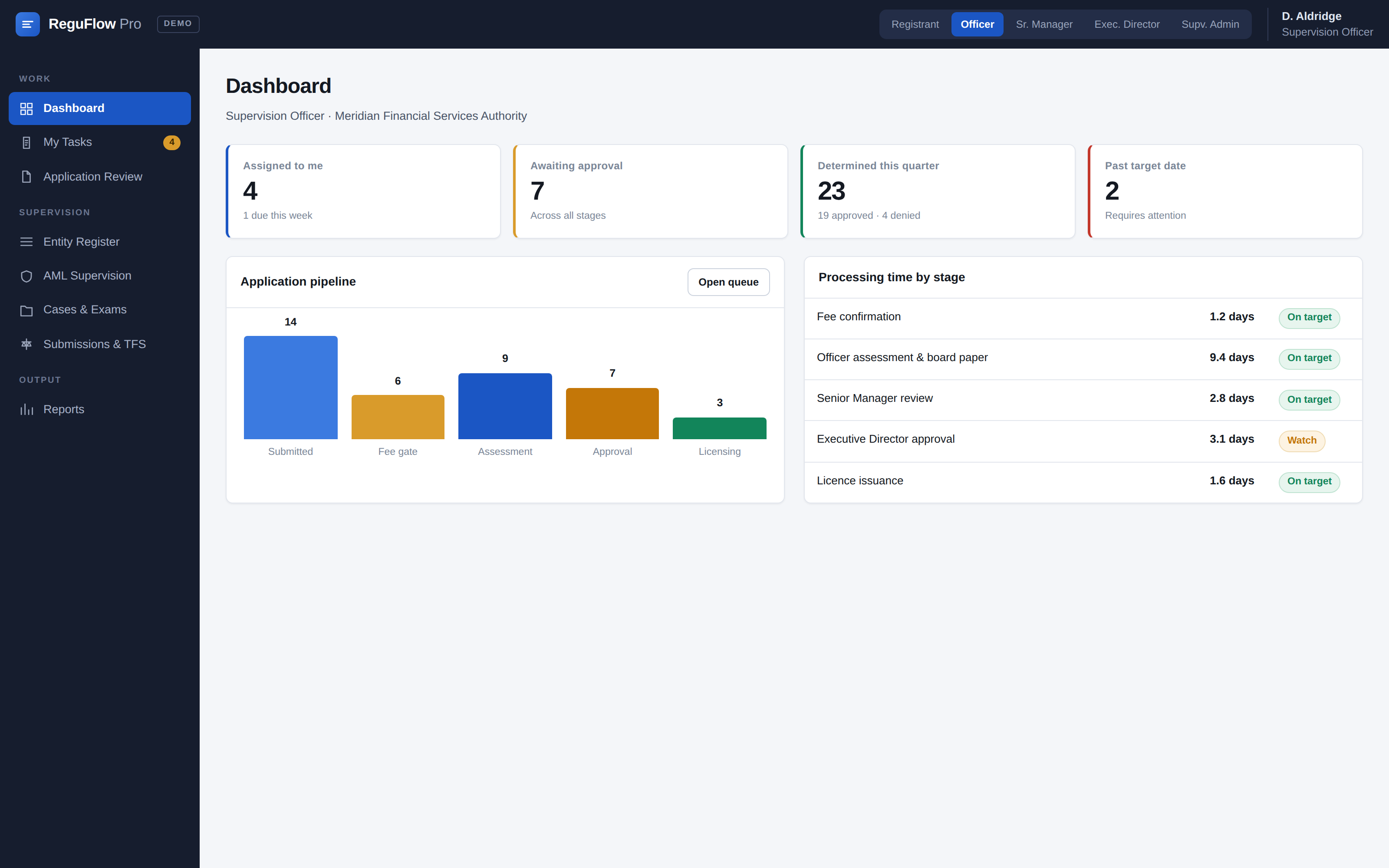
Selected regulatory experience
Experience inside a live regulatory environment.
Amayztech's work with the Securities Commission of The Bahamas includes regulatory e-filing, internal workflow and process modernization, giving our team practical experience with the operational side of regulatory technology.
From technology to operating capability
Technology becomes useful when it becomes part of supervision.
Start with the supervisory function.
Define the operating problem first: what triggers the work, who acts, what evidence is needed, what decision is made and what needs to happen next.
Build reliable data underneath it.
Inconsistent definitions, incomplete history and poor-quality inputs limit what dashboards, analytics and AI can reliably deliver.
Connect insight to action.
A risk signal or exception has limited operational value if it cannot move into review, escalation or supervisory work.
Design governance around automation and AI.
Ownership, validation, human authority and the boundaries of automated assistance should be explicit.
Build for adoption and change.
A technology capability creates value when officers can use it in daily work, leadership can govern it and the authority can adapt it as requirements evolve.
Selected institutional reading
Further reading on supervisory technology
Research on how supervisory agencies use technology for data collection, analysis and supervisory effectiveness.
Innovative technology in financial supervision (BIS / FSI)Questions authorities ask
Questions about regulatory and supervisory technology
What regulatory functions can technology help modernize?
Regulatory technology can support licensing and authorization, recurring filings and obligations, regulated-entity records, supervisory workflow, casework, regulatory portals, data management, analytics and AI-assisted review. The right scope depends on the authority’s mandate, operating model and existing systems.
Does a regulatory technology programme require replacing our existing systems?
No. Existing systems can remain authoritative where they still meet the requirement. Modernization may connect them, improve the workflow around them, replace a specific function or introduce a more unified supervisory environment.
How should regulatory data and workflow connect?
Data becomes operationally useful when an exception, risk signal or obligation can move into a defined review or supervisory action. Workflow becomes more useful when officers can see the data and history surrounding the entity or case they are handling.
Where does AI fit into supervisory work?
AI can help with bounded tasks such as document classification, extraction, retrieval, summarization, comparison and prioritization. Consequential regulatory decisions should remain with accountable people, supported by governed data and a reconstructible record.
Can licensing and authorization be part of a regulatory technology programme?
Yes. Licensing and authorization are core regulatory functions for many authorities. Technology can support application intake, requirements, assessment, approvals, licence issuance, variations and renewals while preserving the decision history.
How can a regulator create a connected view of a regulated entity?
Start by linking the records that describe the entity’s relationship with the authority — licences, submissions, obligations, people and relationships, supervisory activity, cases, findings and documents — through a shared identifier and operating context.
What should an authority modernize first?
Start with a regulatory function where manual handling, fragmented information, poor visibility or operational risk is concentrated. Define the operating outcome first, then determine the workflow, data, integration and technology required.
Where does ReguFlow Pro fit?
ReguFlow Pro is Amayztech’s purpose-built regulatory platform for authorities that need licensing, regulated-entity records, obligations, supervision and casework connected in one operating environment. It is one option within a broader regulatory technology strategy.
Is this also called SupTech?
Technology used by supervisory authorities is commonly described internationally as supervisory technology, or SupTech. Many authorities also use broader terms such as regulatory technology or regulatory modernization. On this page, the focus is the technology used by the authority itself.
From concept to operating model
Start with the regulatory function you want to improve.
Whether the challenge is licensing, regulatory filings, supervisory workflow, data visibility, AI-assisted review or the need for a connected supervisory record, the right architecture starts with the operating requirement — not with a predetermined product.
For securities commissions, central banks, financial-services regulators, insurance and pensions supervisors, and authorities with licensing or supervisory mandates.